



Allyship as the new norm: Tackling trans exclusion in workplaces
Author: Tanya Aswani
“It’s important that we cultivate a culture wherein hatred simply isn’t tolerated. It isn’t enough simply not to be transphobic; it is important to stand firmly and actively against transphobia, when it is expressed by [colleagues, employers, bosses, superiors at workplace]…..It is important that a cis person uses that space of privilege to amplify our voices and stand by us as we fight for our rights.”
–By Trinetra Haldar Gummaraju, trans activist, artist and doctor.
Jane Kaushik is a trans woman with formal teaching qualifications. She faced discrimination and exclusion from employment in two schools when she applied for a job due to her gender identity. After eight days of Jane working in the first school, she was allegedly forced to resign from her post when her gender identity came to be known to her students. When the second school discovered that Jane was a transgender person, they withdrew her offer and denied her entry even before she could join. She approached the Supreme Court of India after being denied employment by two private schools based on her gender identity in October 2025.
We live in a society which is highly rigid about gender binarism, and anyone who falls outside this rigid male-female category is perceived as unnatural and unlawful. While India has had a long socio-cultural history of gender diverse individuals, including hijra, kinnar, and aravani communities, as well as trans-feminine, trans-masculine, non-binary, and agender individuals, they are often marginalised and excluded from economic and social opportunities despite being protected by law.
The case of Jane Kaushik highlighted a huge gap between theory and practice. This is a perfect example that portrays that laws like the NALSA judgment (which recognises the rights of transgender persons as equal citizens entitled to equal opportunity, inclusion and dignity) and the Transgender Persons (Protection of Rights) Act, 2029 (which guarantees that no government or private institution can discriminate against any transgender person based on gender identity in matters of employment, recruitment, promotion, or termination) are nothing but a systematic failure of state institutions to translate them into lived reality for transgender people.
The existing laws do guarantee protection to transgender people, but they are just on paper, and the reality is that transgender population are very much vulnerable and prone to discrimination and transphobia in getting hired or in their existing workplaces. These laws and rights that aim to protect them have become “empty formalities” in reality.
Once hired, within workplaces, transgender people often face-
- Transphobia and homophobia.
- Harassment, bullying and sexual assault by other colleagues in the office.
- Discrimination and stigma by employers in the hiring process and by their colleagues as well.
- Marginalisation, isolation by their co-employees.
- Exclusion from growth opportunities within the organisation
The problem of discrimination, stigma, negative treatment and attitudes towards transgender people in the workplace in India is due to a lack of knowledge, training, and sensitivity developed among the workspaces in India for people who do not fall into the societal gender norms. Lack of social sanctions that prohibit discriminatory behaviour, encourage gender diversity, positive inclusion by cis people, and reporting of discrimination and harassment exacerbate the problem.
To cater to this challenge, there needs to be proper training given to all employees in the workplace. The focus of this training should be on educating and training them to develop empathy and respect for transgender employees. There should be more stringent laws imposed and implemented in favour of protecting transgender and gender non-conforming employees in the workplace. Meaningful inclusion of transgender employees is not only dependent on legal compliance, it requires transformation of workplace norms that promote conformity to inclusive laws and policies, and where all employees focus on creating a respectful environment that openly recognizes diverse gender identities.
By the time Jane Kaushik reached the Supreme Court, she was not seeking reinstatement but was seeking recognition that, as a transwoman, she was facing considerable discrimination in the workplace, employment and hiring.
Workspace policy and behaviour reflect predominant societal norms. The binarism of gender and sex has always ruled our social structures and institutions and is very much still prevalent in our Indian culture and society. Transgender people face discrimination and unequal access to employment in India as they fall outside the societal gender norms. It is high time to implement intensive sensitivity training, encourage advocacy and allyship to break down myths, misconceptions and prejudice that perpetuate discrimination and exclusion of transgender and gender diverse individuals within workplaces and ultimately, within society.
—
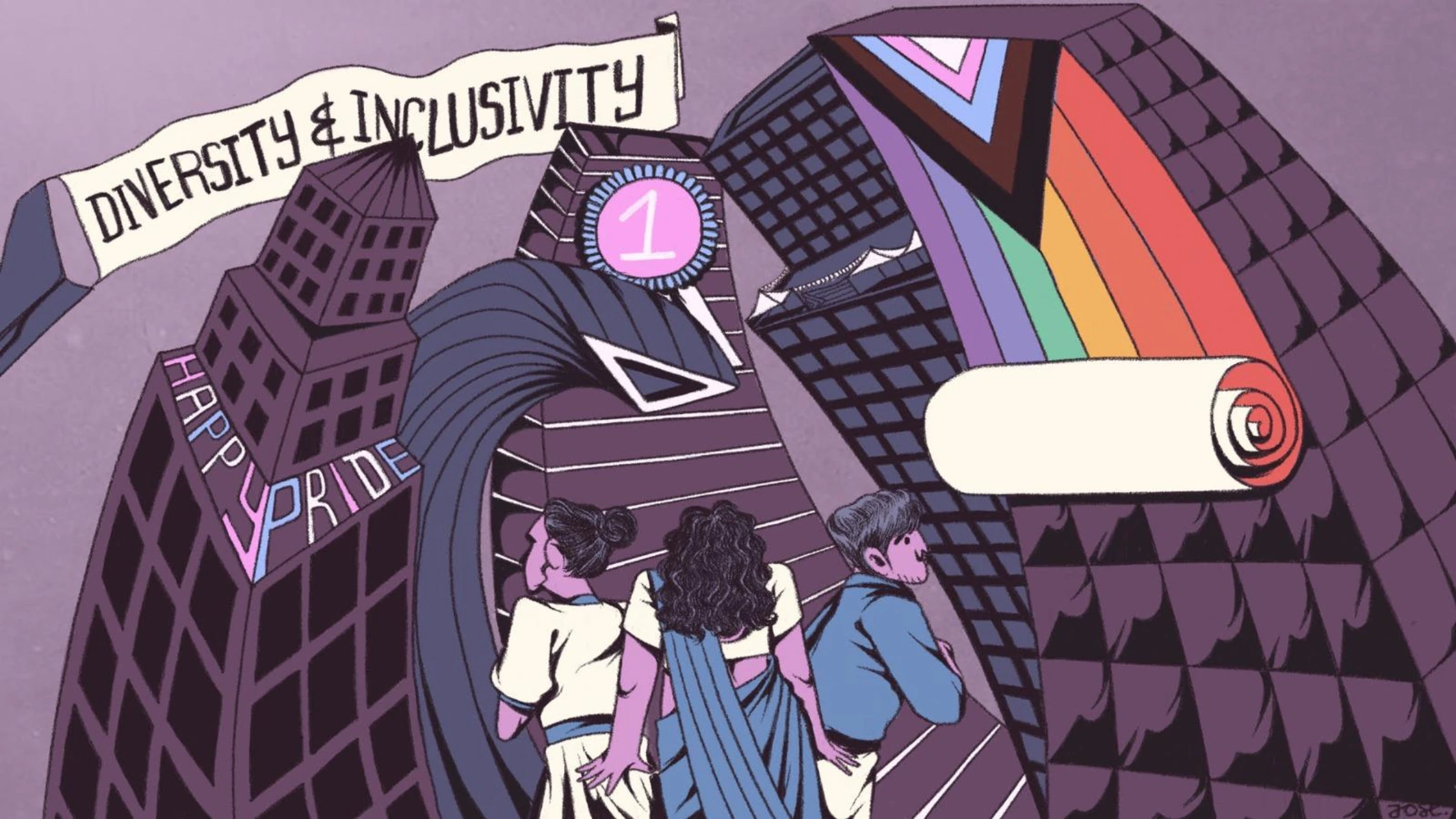
Feature image illustration by Mia Jose


Related Blogs



Centre for Social and Behaviour Change (CSBC), Ashoka University
The Centre for Social and Behaviour Change is a leading Indian institution that drives behavioural change measures for people and communities in need.

Project Concern International (PCI), India
Project Concern International, India has been working since 1998 to co-create and scale sustainable solutions to complex development problems rooted in community realities .