Responsive Menu
Add more content here...

Resources Categories: Blogs

  • Decoding Social Norms for Equitable Skilling

    Decoding Social Norms for Equitable Skilling

    Author: Anukriti Kotwal, Team SA-SNALC

    ________________________________________________________________

    “Can we truly achieve equitable skilling if we focus only on training, curricula, employability, and placement without addressing the deep-rooted social norms that shape aspirations, choices, opportunities, and long-term participation in the workforce?”

    -Ritu Kharayat, PCI India


    Marking UNESCO’s World Youth Skills Day, on 15th July 2026 South Asia Social Norms Agency Learning Collaborative (SA-SNALC) hosted its webinar, “Norm Shifting as a Pathway for Equitable Skilling.” Moderated by Ms. Shahnoor Akter Chowdhury; a feminist scholar-practitioner, senior gender expert, and anthropologist with over 20+ years of experience, the panel brought together key voices from the domain of skilling and social norms, Ishanee Bhattacharyya from Quest Alliance, Shreya Agarwal from Pratham, and Sruthi Niveditha Kande from PCI India.

    While standard skilling discourse centers on the number of training programs conducted, youth enrolled and certified, placement rates, admissions, and overall employment outcomes. This session shifted the attention to a deeper, more fundamental question: “Who gets to choose their future in the first place, and how are those choices shaped?” Do social norms and normative factors influence or shape these choices in deciding who can access, complete, and benefit from the skilling opportunities? Social norms are the unwritten rules that stand unimposed but long before a young person steps into real life, their career path has already been filtered through what their community considers typical and appropriate.

    How do Social Norms Puppeteer Behavior
    Descriptive norms, injunctive norms, reference groups and sanctions

    Our expert panel highlighted some barriers and gatekeepers, mentioned below:

    • The way young people think of their skilling and livelihood trajectories is shaped by what family permits and then the larger social acceptability. When it comes to pursuing non-traditional career paths, the fear of change and moving away from community norms is a major fear for families to withhold approval.
    • Women’s mobility is often constrained by social norms surrounding their public image, safety, and perceived risk of exploitation once they leave their households or communities. These norms restrict young women’s ability to access skilling opportunities, apprenticeships, and jobs beyond their immediate surroundings, limiting their economic participation. 
    • There is a mismatch between the aspirations of the youth and the opportunities available for them. This is mainly due to the societal expectations that typecast certain people into a set of trades “fit” for them. Like men are discouraged from pursuing healthcare and domestic roles, whereas women are discouraged from working in heavy labour and technical roles.
    • Peers from similar reference groups succeeding in non-traditional fields set examples to challenge social norms. The absence of relatable role models in aspirational and non-traditional fields further limits young people’s confidence and ability to pursue their career aspirations. 
    • Many trades have very visible gendered archetypes. A woman in a technical trade or a man in an early-childhood care setting directly challenges established gender aesthetic norms, which is met with resistance from the social circle one belongs to.

    One key learning is that centers like Industrial Training Institutes (ITIs) also fall within the ambit of societal norms. These norms do not end at the entry gates of these learning centers, they are carried by the students, the trainers, and the counselors in various ways. Counselling for women may be targeted towards certain career choices that are seen to be “fit” based on their gender identity. These biases snowball and get perpetuated from that point onwards into professional lives as well. These influences are captured well by the theory of planned behaviour given by Icek Ajzen (1985) (Figure 1)

    Figure 1: Skilling as a planned behaviour, Icek Ajzen (1985)
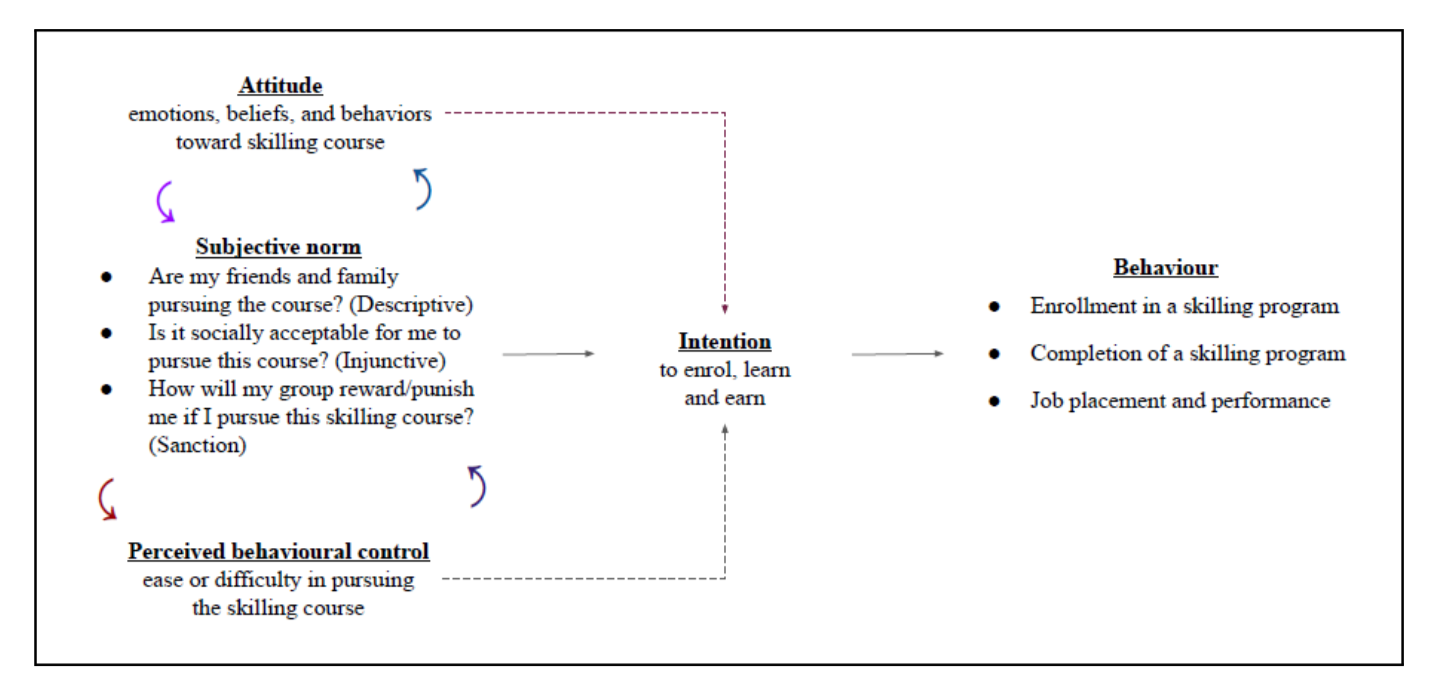
    Source: Presentation by Vineha Tatkar, SA-SNALC on 21st July, 2026 in ‘Norms Shifting as a Pathway for Skilling’

    Strategies to Shift Restrictions Posed by Social Norms for Equitable Skilling:

    In order to shift social norms, it is important to work across individual, interpersonal, organisational and community levels, working with individuals and reference groups to ensure that key influencers support change and a new norm is created in the space of skilling of youth. 

    • Individual/Intrapersonal: Building agency and self-sufficiency.
    • Interpersonal: Influences key decision makers like family and peers.
    • Organisational: Removing bias from institutions and workplaces.
    • Community: Reducing sanctions and bringing a shift in collective expectations.
    • Public Policy: Enabling policies that facilitate behavioral change.

    The panelists shared real life, field-tested solutions that aim at breaking restrictive patterns in youth skilling and employability caused by social norms. These can be described mainly in three ways:

    • Pratham Skilling- Continuous reinforcement is crucial to shift norm based expectations through career centers that provide support, mobilization to placement and aid in developing a strong employer network, post placement to provide training and placement support.
    • PCI India- Employers become major enforcers of workplace norms, there is an active need to reduce bias in hiring practices and encourage recruitment that is focused on aptitude instead of gender stereotypes. This fosters social behavior change.
    • Quest Alliance- While institutions alone cannot shift social and gender norms, they have the potential to become strong catalysts for change, for which Quest Alliance has established an institutional-level task force to work on assumptions and biases in workplaces.

    Rigid definitions of traditional vs non-traditional work can be highly restrictive for individual freedom of choosing their career pathways and economic empowerment. Choice gets compromised when societal expectations force the youth to pick from predefined options. The Q&A session was resonant with this idea. Equitable skilling is not only about filling seats in training centres and expanding the reach in the number of courses available, but it is also about agency in the choice of careers, quality training, and balancing the aspirations of the youth with the opportunities available; these are the goals that must be forefronted instead of predefined skilling programs and placements based on prevalent social and gender norms.

    Watch the full webinar here: https://socialnormscollaborative.net/events/webinar/norms-shifting-as-a-pathway-for-equitable-skilling/

    Featured Image Creator: C.V.Subrahmanyam | Credit: THG Publishing Private Limited
  • Allyship as the new norm: Tackling trans exclusion in workplaces

    Allyship as the new norm: Tackling trans exclusion in workplaces

    Author: Tanya Aswani


    “It’s important that we cultivate a culture wherein hatred simply isn’t tolerated. It isn’t enough simply not to be transphobic; it is important to stand firmly and actively against transphobia, when it is expressed by [colleagues, employers, bosses, superiors at workplace]…..It is important that a cis person uses that space of privilege to amplify our voices and stand by us as we fight for our rights.”

    –By Trinetra Haldar Gummaraju, trans activist, artist and doctor. 


    Jane Kaushik is a trans woman with formal teaching qualifications. She faced discrimination and exclusion from employment in two schools when she applied for a job due to her gender identity. After eight days of Jane working in the first school, she was allegedly forced to resign from her post when her gender identity came to be known to her students. When the second school discovered that Jane was a transgender person, they withdrew her offer and denied her entry even before she could join. She approached the Supreme Court of India after being denied employment by two private schools based on her gender identity in October 2025. 

    We live in a society which is highly rigid about gender binarism, and anyone who falls outside this rigid male-female category is perceived as unnatural and unlawful. While India has had a long socio-cultural history of gender diverse individuals, including hijra, kinnar, and aravani communities, as well as trans-feminine, trans-masculine, non-binary, and agender individuals, they are often marginalised and excluded from economic and social opportunities despite being protected by law.

    The case of Jane Kaushik highlighted a huge gap between theory and practice. This is a perfect example that portrays that laws like the NALSA judgment (which recognises the rights of transgender persons as equal citizens entitled to equal opportunity, inclusion and dignity) and the Transgender Persons (Protection of Rights) Act, 2029 (which guarantees that no government or private institution can discriminate against any transgender person based on gender identity in matters of employment, recruitment, promotion, or termination) are nothing but a systematic failure of state institutions to translate them into lived reality for transgender people. 

    The existing laws do guarantee protection to transgender people, but they are just on paper, and the reality is that transgender population are very much vulnerable and prone to discrimination and transphobia in getting hired or in their existing workplaces. These laws and rights that aim to protect them have become “empty formalities” in reality.

    Once hired, within workplaces, transgender people often face-

    • Transphobia and homophobia.
    • Harassment, bullying and sexual assault by other colleagues in the office.
    • Discrimination and stigma by employers in the hiring process and by their colleagues as well. 
    • Marginalisation, isolation by their co-employees.
    • Exclusion from growth opportunities within the organisation

    The problem of discrimination, stigma, negative treatment and attitudes towards transgender people in the workplace in India is due to a lack of knowledge, training, and sensitivity developed among the workspaces in India for people who do not fall into the societal gender norms. Lack of social sanctions that prohibit discriminatory behaviour, encourage gender diversity, positive inclusion by cis people, and reporting of discrimination and harassment exacerbate the problem. 

    To cater to this challenge, there needs to be proper training given to all employees in the workplace. The focus of this training should be on educating and training them to develop empathy and respect for transgender employees. There should be more stringent laws imposed and implemented in favour of protecting transgender and gender non-conforming employees in the workplace. Meaningful inclusion of transgender employees is not only dependent on legal compliance, it requires transformation of workplace norms that promote conformity to inclusive laws and policies, and where all employees focus on creating a respectful environment that openly recognizes diverse gender identities.

    By the time Jane Kaushik reached the Supreme Court, she was not seeking reinstatement but was seeking recognition that, as a transwoman, she was facing considerable discrimination in the workplace, employment and hiring. 

    Workspace policy and behaviour reflect predominant societal norms. The binarism of gender and sex has always ruled our social structures and institutions and is very much still prevalent in our Indian culture and society. Transgender people face discrimination and unequal access to employment in India as they fall outside the societal gender norms. It is high time to implement intensive sensitivity training, encourage advocacy and allyship to break down myths, misconceptions and prejudice that perpetuate discrimination and exclusion of transgender and gender diverse individuals within workplaces and ultimately, within society.


    —

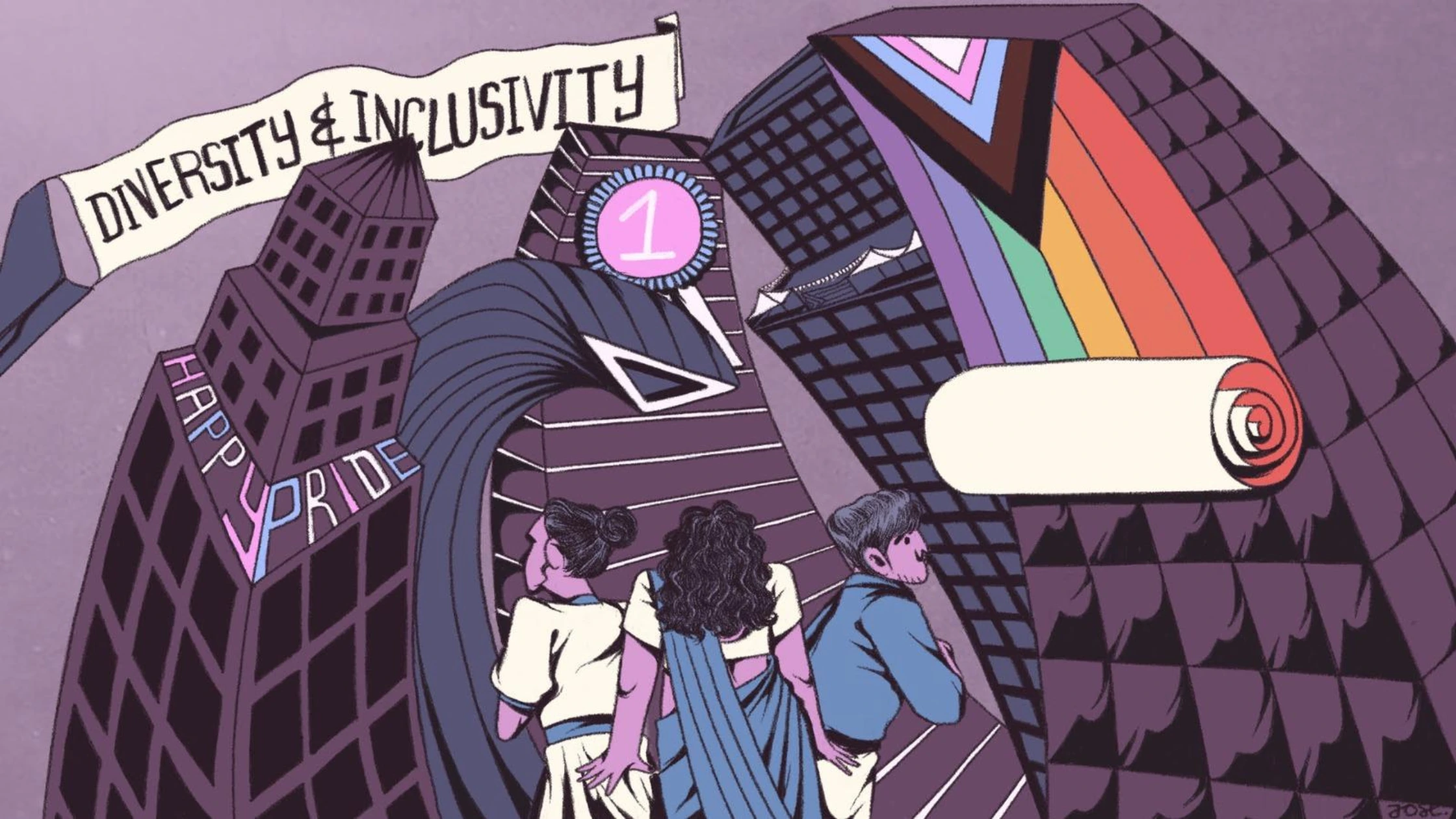
    Feature image illustration by Mia Jose 

  • Social Norms and the Lives of Young Girls and Women in India

    Social Norms and the Lives of Young Girls and Women in India

    Author: Dr. Shweta Singh, Independent Consultant


    Social norms – the unwritten rules of what people believe is acceptable or expected in their communities – shape life choices in profound ways. In India, these norms influence almost every aspect of an adolescent girl’s or young woman’s life: education, mobility, marriage, economic participation, and bodily autonomy.

    When these norms are restrictive, they curb agency, limit mobility, and reinforce unequal power dynamics. Education is often the first casualty. Parents may hesitate to send daughters to school if it means long travel or interaction with boys, stunting girls’ academic and career growth. In some states, child marriage persists, fuelled by poverty and cultural expectations. For girls from low-income families, the odds are even steeper – they may be withdrawn from school to work or be married early to reduce the family’s financial burden.

    Why Norms Are Hard to Change

    Norms are “sticky” because they are upheld by fear of exclusion and social judgment. They persist because:

    • People fear gossip, disapproval, and social sanctions.
    • Gatekeepers (parents, elders, husbands) believe they are protecting girls.
    • Popular culture often reinforces traditional roles.
    • Policy reforms do not automatically shift community beliefs.

    A BBC Media Action study (2023) in small-town India revealed that women aged 18–25 were 11% less likely to own a mobile phone and 40% less likely to use mobile internet than men. The gap was not about affordability – it was about entrenched ideas of “appropriate” behaviour for women.

    Yet, norms can evolve — sometimes through gradual changes in everyday interactions, community leadership, and the stories people consume.

    Why Social Norms Matter for Gender Equality

    Norms are not just personal opinions; they are collective expectations. Even if a girl wants to act differently, she may conform to avoid backlash.

    For example:

    • A young woman in Uttar Pradesh might want to work in a shop, but fears her family will face public shaming.
    • A girl in rural Maharashtra may want to access online learning, but worries she will be seen as “immoral” for spending time on the internet.

    Research by Dalberg and the Centre for Social and Behaviour Change (CSBC) identifies seven meta-norms that shape the lives of adolescent girls and young women:

    1. Gender stereotypes – rigid expectations about what men and women can or should do.
    2. Interpersonal dynamics – power imbalances within families and communities.
    3. Perceived value – girls’ worth often tied to marriageability.
    4. Purpose/social role – the belief that women’s primary role is domestic.
    5. Agency – the ability to make decisions about one’s life.
    6. Independent mobility – freedom to move alone in public spaces.
    7. Sexual autonomy – control over one’s body, relationships, and choices.

    These norms are interlinked. A restriction on mobility is not just about safety — it limits access to education, jobs, and information, reinforcing stereotypes about women’s “capabilities.”

    Why Changing Norms Matters

    Norms shape tangible outcomes:

    • Whether a girl stays in school.
    • Whether she can own a mobile phone.
    • Whether she participates in sports.
    • Whether she chooses her own career or marriage partner.

    Restrictive norms diminish confidence, stifle aspirations, and pass inequality down through generations. Shifting these norms is vital for progress in education, health, economic empowerment, and gender equality.

    Media and Cultural Champions: Exploring Their Possible Role in Norm Change

    Entertainment media and cultural champions can help open the door to change — not by imposing new norms, but by making alternatives visible, relatable, and acceptable.

    Entertainment media — from TV dramas to social media narratives — can subtly challenge stereotypes by portraying characters and situations that normalise non-traditional roles. A television storyline where a girl negotiates with her father to attend college can make the idea feel possible to millions. A YouTube influencer speaking openly about menstrual health can break taboos in communities where the topic is rarely discussed.

    Cultural champions — trusted local voices such as faith leaders, grassroots influencers, community mobilisers, and youth role models — can lead by example. Their power lies in trust and cultural credibility, which helps bridge the gap between long-held traditions and new possibilities.

    We explored this, and more in our research on exploration of evidence on programming for adolescent girls and young women in India, now available here. The first key takeaway: Norms shift, and the change is tangible!

  • Keeping Cool: Can We Shift Social Norms for Heat Adaptation?

    Keeping Cool: Can We Shift Social Norms for Heat Adaptation?

    Author: Vineha Tatkar, MA Psychology (Social), Program Associate – PCI India

    Edited by: Sushmita Mukherjee, Director – Gender and Adolescent Girls, PCI India


    As heatwaves become more intense and frequent, the National Disaster Management Authority (NDMA) of India urges people to take essential precautions: avoid going out between 12–3 p.m., stay hydrated, wear breathable clothing, and shield yourself from the sun. But how easy is it to follow this advice in real life?

    Social Norms vs Survival Norms

    Despite the clear health risks, many people struggle to follow these guidelines—often due to deep-rooted social norms and economic compulsions. Let’s explore a few:

    The Lunch Hour Hustle

    For street vendors, lunch hour is peak business time. Skipping work between 12–3 p.m.—when heat exposure is most dangerous—could mean losing income. Heat-safe behaviour isn’t always economically feasible.

    Chai Pe Charcha

    Chai breaks are a staple of Indian social life, even in soaring temperatures. But caffeine dehydrates, and swapping chai for water or buttermilk might feel socially awkward or less “normal” in many settings.

    Mai Hoon Don Syndrome

    Though covering your head can protect you from heatstroke, many men avoid using scarves or umbrellas due to masculine stereotypes—viewing these practices as unnecessary or unmanly. Along with gender norms, the aversion can also be attributed to egocentric biases (such as the false uniqueness bias, illusory bias and the third-person effect).

    Jal Hi Jeevan Hai—But at What Cost?

    Free drinking water outlets (प्याऊs) are vanishing, replaced by bottled beverages that are unaffordable for many. Water access remains entangled in caste, class, and religious dynamics, limiting safe hydration options for vulnerable groups.

    What Needs to Change?

    Behavioral shifts need more than information—they require norm change. We need to make heat-adaptive behaviours socially acceptable, even aspirational.

    • Could businesses stagger hours to reduce peak sun exposure?
    • Can media campaigns rebrand hydration and headgear as “smart” and “strong”?
    • What if socialising over lemon water became the new chai pe charcha?

    We already know what to do. The challenge is: Can we shift the social norms to make “keeping cool” the cool thing to?

  • Climate Change and the Care Economy: Unpacking the Gendered Burden of Environmental Crises

    Climate Change and the Care Economy: Unpacking the Gendered Burden of Environmental Crises

    Author: Sushmita Mukherjee, Director – Gender and Adolescent Girls, PCI India


    Introduction

    In global discourses, climate change and the care economy are often discussed as separate issues. However, their intersection remains largely underexplored. The unpaid and underpaid care work performed by women—an invisible yet indispensable foundation of economies—faces severe disruptions due to climate crises. Climate disasters exacerbate gender inequalities by increasing the burden of care work while simultaneously restricting women’s access to economic opportunities. Recognizing, reducing, and redistributing this burden is imperative for ensuring sustainable and equitable development.

    The Care Economy: An Indispensable yet Undervalued Pillar

    The care economy encompasses both paid and unpaid labour associated with caregiving and domestic responsibilities, crucial for sustaining societies. From childcare and eldercare to household chores and community support, women disproportionately shoulder this burden. Yet, this critical contribution remains largely unrecognized in economic indicators like Gross Domestic Product (GDP). Globally, women’s unpaid care work is estimated to contribute billions of dollars to economies, but its invisibility in policy frameworks results in missed opportunities for intervention.

    The 5R framework—Recognize, Reduce, Redistribute, Reward, and Represent—offers a comprehensive lens to address the challenges of the care economy:

    • Recognize: Acknowledge the economic value of unpaid care work.
    • Reduce: Implement labour-saving infrastructure and policies to alleviate the burden.
    • Redistribute: Promote gender-equitable sharing of care responsibilities within households and between state and private sectors.
    • Reward: Ensure fair wages and social protections for care workers.
    • Represent: Strengthen the collective voice of care workers in policy and governance.

    Despite advocacy efforts, progress has been slow. Structural inequalities persist, with care responsibilities limiting women’s workforce participation and economic mobility, particularly in low-income and climate-vulnerable regions.

    Climate Change and the Gendered Care Burden

    Environmental changes disrupt the very fabric of caregiving systems. Climate-induced disasters such as droughts, floods, heatwaves, and erratic monsoons intensify the demands on women’s time and labour. The interplay between climate and care manifests in two primary ways:

    1. Increased Care Responsibilities Due to Climate Stressors
    • Water scarcity and fuel shortages: Women and girls in marginalized communities often bear the responsibility of sourcing water and fuel for household use. Climate-related droughts and deforestation increase the time and effort required for these tasks, leading to time poverty, where women’s ability to engage in education or paid work is severely constrained.
    • Health crises: Extreme weather events heighten risks of malnutrition, vector-borne diseases, and respiratory illnesses, increasing the demand for unpaid healthcare within households. Poor air quality, especially in urban slums, intensifies caregiving responsibilities as children and elderly family members require medical attention.
    • Displacement and migration: Climate-induced displacement disproportionately affects women, as they are left to manage homes and communities in the absence of male family members who migrate for work. This places additional stress on their caregiving roles.
    1. Loss of Livelihoods for Women in Climate-Exposed Sectors
    • Women’s participation in informal and outdoor work, such as agriculture, street vending, construction, and waste picking, makes them highly vulnerable to climate shocks.
    • Extreme heat reduces working hours and earnings, forcing women to cut down on paid work in favour of unpaid domestic labour.
    • Climate change threatens traditional livelihoods, such as fishing and forest-based industries, where women play critical but underrecognized roles. The degradation of natural resources forces them out of employment, worsening financial precarity.

    Bridging Policy Gaps: The Way Forward

    Despite growing awareness, policy frameworks addressing climate and care remain largely fragmented. India’s National Action Plan on Climate Change (NAPCC) minimally acknowledges gendered vulnerabilities, focusing predominantly on mitigation rather than adaptation strategies that integrate women’s concerns. Existing policies addressing the care roles of women—such as the maternity entitlements, workplace infrastructure, childcare and eldercare facilities and so on—also operate in silos, hardly recognise the importance of including climate resilience measures.

    To build an inclusive and sustainable future, policy alignment is crucial:

    1. Recognizing the care economy in climate policies: National and global climate action plans must integrate the 5R framework, acknowledging the increased burden of care due to climate crises.
    2. Investing in climate-resilient care infrastructure: Expanding access to safe water, clean energy, clean fuel, affordable housing and public health services for women and children can alleviate caregiving pressures on women as a basic first step.
    3. Creating gender-responsive social protection systems: Cash transfers, subsidized childcare, and work-hour flexibility can help women navigate the dual challenge of care work and climate stressors.
    4. Enhancing women’s access to climate adaptation resources: Skill development, financial support, and livelihood diversification strategies should target women disproportionately affected by environmental changes.
    5. Shifting social norms around unpaid work: Engaging men and communities in redistributing care responsibilities is essential for achieving gender equity in the context of climate adaptation.

    Conclusion

    The intersection of climate change and the care economy is an urgent yet under-addressed crisis. Women’s unpaid and underpaid labour sustains societies, yet climate disasters exacerbate their workload while restricting economic opportunities. Policy frameworks must shift from treating care and climate as separate silos to recognizing their interdependence. A gender-responsive climate strategy—grounded in care justice—can pave the way for inclusive, equitable, and sustainable development.

    The future of climate resilience depends not only on environmental conservation but also on dismantling gendered inequalities in care work. Addressing this intersection is not just an economic necessity—it is a moral imperative.


    Note: This blog is based on a webinar on the same topic. Dr. Sona Mitra, the subject matter expert, was the speaker. The webinar was hosted by SNALC on December 17, 2024. Access the full webinar here.

  • Youth Power: Driving Change for a Cleaner Future

    Youth Power: Driving Change for a Cleaner Future

    Author: Divya Kant Pandey, Student, IIFM Bhopal


    During a casual walk through my city last week, I stumbled upon an inspiring sight: a group of young people diligently working to clean the city’s drains. Clad in uniforms, equipped with safety gear, and using innovative tools like filtering nets and chemical treatments, their mission was clear— tackling the waste clogging our urban waterways. Yet, their impact reaches far beyond the drains they clean; it symbolizes a new wave of youth-led climate action grounded in ingenuity and collective agency.

    The Global Water Crisis: A Looming Challenge

    The significance of such grassroots action becomes apparent when viewed against the backdrop of the global water crisis. Climate change is exacerbating water scarcity, particularly in arid and semi-arid regions like India, where over half a billion people already face severe water stress. Poor water quality, driven by pollutants and inadequate sanitation, further compounds the problem. According to UNICEF, contaminated water leads to 1.4 million child deaths annually, making water-related issues among the most pressing challenges of our time. UNICEF Transparency Portal .

    Water systems are also deeply interconnected with climate dynamics. Rising temperatures and unpredictable river flows lead to heightened pollution and diminished water quality, creating a vicious cycle. For instance, untreated plastic waste often makes its way from urban drains into rivers, exacerbating ecological damage. These challenges call for innovative solutions—and the youth-led initiatives I witnessed provide a glimmer of hope.

    From Individual to Collective Agency

    The work of these young environmentalists can be framed within the concepts of individual and collective agency. Individual agency refers to the capacity of an individual to act independently and make free choices. Each youth involved in cleaning drains demonstrates this through their personal commitment to environmental stewardship. However, their power is amplified through collective agency—the shared efforts of the group, mobilized through common goals and strategies. Together, they are not only mitigating immediate waste issues but also fostering a ripple effect by educating and inspiring others via social media campaigns.

    Studies have shown that such initiatives thrive when they integrate grassroots activism with modern tools like digital platforms. Youth-led initiatives often flourish when they combine grassroots activism with modern tools like social media and digital platforms, as demonstrated in a study by the International Journal of Environmental Research and Public Health, which found that youth activism amplified via online campaigns significantly increases public engagement and policy attention. Another example comes from the Global Climate Strike movement, where social media platforms enabled millions of young people to mobilize for climate action across over 150 countries.

    Scaling Grassroots Solutions

    Youth-led initiatives like this often start small but have the potential to scale when supported by institutional frameworks. For example, programs like India’s Swachh Bharat Abhiyan and global movements for sustainable cities have proven that grassroots efforts can integrate with policy-driven interventions to magnify impact. One grassroots initiative that exemplifies this integration is the work of The Ugly Indian, a volunteer-driven movement focused on urban cleanliness. Their efforts to clean up public spaces in Indian cities aligned with Swachh Bharat Abhiyan, inspiring similar initiatives nationwide. Another example is the Barefoot College, which trains rural youth and women in solar electrification. Their model has been incorporated into India’s broader renewable energy agenda and adopted in other countries like Africa and the Pacific Islands. Globally, similar grassroots contributions to sustainable urban development can be seen in movements like Bogotá’s Ciclovía, which transformed urban mobility and became a model for cities worldwide.

    A Call to Action

    This story of drain-cleaning is more than just an anecdote; it is a testament to the transformative potential of young people when equipped with the right tools and a sense of purpose. The challenges posed by climate change and the water crisis demand collaborative solutions, and youth-led initiatives serve as beacons of what can be achieved through determination and innovation. As these young leaders demonstrate, the power to create change lies in collective action—an ethos that can inspire us all.

  • Women’s Day Off

    Women’s Day Off

    Author: Ragini Puri, Strategy Executive- Care Economy Solution Incubator at PCI India


    In October 1975, women all over Iceland went on strike to protest the gender pay gap. When the strike was first suggested, Icelandic men did not take the idea too seriously. However, industries ranging from telecommunications to banking suffered as they functioned at half-capacity. Men had to take their children to work as women refused to perform childcaring activities, and schools and nurseries remained shut as they mostly employed women.

    On October 24, 1975, women across Iceland went on strike to demonstrate the importance of their labour, both professional and domestic. Known as kvennafrídagurinn, or Women’s Day Off, some 90% of Icelandic women participated in the labour action.

    – from the archives of Iceland Review

    In November 1980, Iceland’s Vigdis Finnbogadóttir became Europe’s first democratically elected female president, citing 1975’s “Women’s Day Off” as a direct influence on her political career. For the last fourteen years, Iceland has consistently ranked first in the Global Gender Gap Index, i.e. it is the country with the least gender gap.

    Gender and Care Work in India

    India has consistently ranked in the bottom 50 of the Global Gender Gap Index. In 2019, India’s Time Use Survey (TUS) found that in the working age of 15-59 years, women spend 5.6 hours (23% of a 24-hour day) on unpaid care work daily, compared to 30 minutes (2.08% of a 24-hour day) spent by men. The survey also found women engaged in the workforce regularly experience the double burden of balancing paid work and unpaid care work responsibilities. 93% working women performed unpaid care services for household members compared to 31% working men. All this to say, are Indian women due to take a day off? Findings from the TUS certainly say so.

    Given that almost 82% of women’s labour in India is concentrated in the informal economy, what would a “day off” even look like? Gendered social norms around caregiving designate it as the domain of women. For a postcolonial nation like India, these norms create an atmosphere where unpaid servitude is the ultimate virtue for women. This explains the wide gap between working men and working women performing unpaid domestic duties.

    With the precarious position of gender equality in India, performing unpaid care labour allows women to earn crucial social currency.

    Economist and author Shrayana Bhattacharya writes,

    “Our institutions…ensure that men and women inhale what society expects of them…Men must earn money and women must earn love.”

    In the absence of monetary compensation, respect and influence within the family are on offer for caregivers. One would assume when the caregiver moves into the role of breadwinner, these rewards automatically become entitlements. Unfortunately, this process gets skewed due to gendered notions of women as caregivers and men as breadwinners. When these roles are challenged, women end up with the double burden of earning money in the public sphere and love in the private sphere. In contrast, for men, earning money in the public sphere secures their baseline of receiving love in the private sphere.

    The numbers tell us that Indian women deserve a day off. But would the consequences be worth it?

    Perhaps the question we should be asking is whether Indian women, if given the option, would take a day off at all.


  • Law vis a vis social norms – Examining the social realities of the POCSO Act

    Law vis a vis social norms – Examining the social realities of the POCSO Act

    Author: Manasvini Ranganathan, Legal Associate-Research and Policy at Pacta


    Implementation of laws in India is a daunting task that involves navigating the prevalent social norms and multicultural contexts. For example, the Protection of Children against Sexual  Offences Act, 2012 (POCSO). POCSO is enacted to protect children (the law defines this to be anyone under 18) from sexual predators. This includes most adolescents. The effect of this is that adolescents who are in consensual relationships are being equated to sexual predators under the law.

    Parents and guardians of adolescent minors are also filing POCSO complaints against the partners of their children/wards. When the two parties involved are in a consensual relationship and are adolescents who are close in age, a POCSO complaint seems a disproportionate measure to address the concerns of the parents. The prevalent social norms that exacerbate this measure are (1) consensual relationships that do not constitute marriage are taboo, and (2) parents make decisions on behalf of their children in many Indian families including who their children should marry.


    The prevalent social norms that exacerbate filing of false POCSO complaints are the society’s disapproval of consensual relationships outside marriage and societal acceptance of parents as decision-makers of various aspects of children’s lives. 


    While concerns of the parents and guardians are not to be brushed aside, a study by Enfold India has shown that 80 per cent of cases filed under POCSO are false. This undermines the purpose of the Act and the efficacy of the justice delivery system.

    The POCSO Act, 2012 also has led to another implementation challenge posed by the multicultural context prevalent in India. While speaking to a person working with tribal communities in Tamil Nadu, I was informed that many tribal youths are booked under the POCSCO Act, 2012. The prevalent social norms in tribal communities vastly differ from those of the general population. Many communities consider puberty to be the acceptable age for consensual relationships and marriage. People who work with tribal communities also face a dilemma on whether they need to report such relationships to the police. This is because, under Section 21 of the POCSO Act, 2012 reporting such incidents is mandatory when one of the parties is a minor. Failing to do so is a punishable offence under the Act.

    Solutions to address these problems should therefore negotiate with the diverse and contextual social norms. These include:

    (1) A Romeo-Juliet clause in the PoCSO Act, 2012 exempting consensual relationships between persons who are close in age from punishment under POCSO. The Supreme Court is currently hearing a writ petition on this matter.

    (2) Advocacy efforts to accommodate the customs of the tribal communities and other minorities while framing legislation. This can be achieved through stakeholder consultations with members of the community so their views are better represented in the laws that govern them.

    (3) Protocols in place on what situations should be reported and sensitizing relevant stakeholders such as social workers and health practitioners who are more likely to find out about incidents of sexual acts involving adolescent minors

    (4) An age-appropriate and culturally contextualized sex education that enables adolescents to make informed choices and support mechanisms when adolescents seek empathy and counselling.


  • The Chicken-and-Egg Dilemma: Social Norms and Social Structures

    The Chicken-and-Egg Dilemma: Social Norms and Social Structures

    Author: Dr. Shambhavi Sharma; Public health researcher (BDS, MPH) & Research Officer – SRHR at PCI India


    In the midst of ongoing discussions surrounding social norms, many find themselves entangled in a web of questions. Are we referring to descriptive or injunctive norms? How do we measure them? Is it about individual agency or the intention to exercise agency within existing frameworks and societal structures? What about the cultural lens shaping qualitative measurement tools? Within this maze of considerations, one may wonder:

    Where do we even begin?

    For instance, can we objectively scale and measure the existing range of say, patriarchy? Can someone be “less patriarchal” or “more patriarchal”? What does it mean to be “somewhat” or “sometimes” patriarchal? What’s the transferability of this alleged patriarchy scale?

    As we contemplate the feasibility of quantifying patriarchy, or intersectionality in the South Asian diaspora, or gender norms, or fertility norms; we uncover a deeper truth: Norms don’t exist in isolation.

    They reside within the virtual fabric of structures and systems, which become tangible through participatory individual actions. When we situate these norms within existing programs, whether it’s the WASH initiative, SRHR, livelihood endeavors, or sustainability and environmental health efforts, we observe that the same individuals operate within these structures. However, these structures are also alive. They aren’t rigid, and the norms encountered within these structures are far from unidirectional. By unveiling the dual nature of structures, we understand how rules, laws, and norms shape behaviour as much as the actions of individuals who uphold, reshape, and reconstruct them (Giddens, 1999).

    This perspective assigns interpretive responsibility to the individual while acknowledging the perpetual influence of culture. The tendencies of individual actions, whether in compliance with or deviance from cultural norms (Zaidi et al., 2016), often converge and collectively reshape and construct culture, giving rise to meta norms that shape and co-create social structures.

    Consider a scenario where an individual intends to ride a bicycle to work, having the agency to make this healthy and eco-friendly choice. Yet, this agency is curtailed by the absence of designated cycle paths enroute. Additionally, the apprehension of being perceived as an outlier in a new workplace may discourage the individual from pursuing this option. Despite recognizing biking as a positive behaviour, the individual faces a dilemma: conform to the perceived norm or embrace the risk of being different. This might lead most to choose the path of least resistance and ultimately abandon the idea.

    This contrast between affirmative action and the potential negative perception illustrates how societal structures and personal agency interact, often leading individuals to negotiate with themselves– perhaps biking to work sporadically or not at all, to avoid contesting the norm (Heilman & Herlihy, 1984). Then again, if they stumble upon a like-minded individual, it could reignite their initial intent.

    Whichever scenario is exercised, this brings us to a critical realization: the reciprocal nature and relationship of norms with societal structures. Whether individuals deliberate within themselves or find in new agents to be empowered, the dynamic interplay between individual agency and societal expectations is undeniable. This cycle of norms and structures—vicious in its interdependence and symbiosis—demonstrates the complexity of enacting change.

    To attempt to navigate this cycle, I contend that hope is indispensable. Serving as a catalyst for breakthroughs, hope encourages individuals to challenge norms and inspires collective efforts to remodel societal structures. In essence, initiating change with hope at its core is imperative. It represents the most poignant starting point, fostering the belief that both individual actions and structural reforms can lead to visible, meaningful outcomes.

    [Author’s Note: The author’s sense of hope is derived from the concept of “applied hope” by Amory Lovins- “..but in the pragmatic and grounded conviction that starting with hope and acting out of hope can cultivate a different kind of world worth being hopeful about, reinforcing itself in a virtuous spiral. Applied hope is not about some vague, far-off future but is expressed and created moment by moment through our choices.”]

    References:

    Giddens, A. (1999). Elements of the theory of structuration. The Blackwell reader. Contemporary social theory, 119-130.

    Heilman, M. E., & Herlihy, J. M. (1984). Affirmative action, negative reaction? Some moderating conditions. Organizational Behavior and Human Performance, 33(2), 204-213.

    Sax, J. L., & Lovins, A. B. (2007) Blue Planet Prize.

    Zaidi, A. U., Couture-Carron, A., & Maticka-Tyndale, E. (2016). ‘Should I or Should I Not’?: an exploration of South Asian youth’s resistance to cultural deviancy. International Journal of Adolescence and Youth, 21(2), 232-251.


  • Digital Spaces for Norm Shifting among Adolescents

    Digital Spaces for Norm Shifting among Adolescents

    Author: Vineha Tatkar, Program Associate, SA-SNALC, PCI India


    While screens have become ubiquitous today, the quality of access to digital spaces is highly unequal. This disparity extends beyond adolescence into reproductive age, as was seen in a study by Scott, Shinde and Ummer et al (2021). As compared to young men surveyed, the range of socially acceptable uses of the mobile phone was restricted for young women, mostly in their 20s. The researchers illustrated a framework of the determinants of digital use (Figure 1) – gender norms affecting access at every level of the eco-system framework.  

    Figure 1 – Determinants of Digital Use  

    Source: Scott K, Shinde A, Ummer O, et al Freedom within a cage: how patriarchal gender norms limit women’s use of mobile phones in rural central India. BMJ Global Health 2021;6:e005596.   

     Norms deeply entrenched in the patriarchal system need to be broken down and shifted for adolescent girls & women to gain greater access to digital spaces and leverage them for their empowerment. 

    SA-SNLC along with C3 India jointly hosted an online panel discussion on Leveraging Digital Spaces for Norm Shifting among Adolescents on 23rd November 2023. The speakers were Arti Shukla from Development Consortium, Vandana Nair from C3 India, and Osama Manzar from Digital Empowerment Foundation. The session was moderated by Dr Aparajita Gogoi from C3 India.  

    This blog draws upon key insights from the webinar outlining the nuances of the digital world that impact adolescent’s lives, the need for quality access and best practices to implement digital solutions for facilitating change.  

    What are the best practices for designing digital interventions for norm shifting? 

    Digital solutions carry the advantage of scalability and high engagement with audiences, and can be crucial in increasing the pace of norm shifting interventions.  

    Leveraging platforms such as social media, websites, podcasts, videos and the likes can help in communicating around sensitive topics with adolescents. Questions we can ask to make norms messaging effective for adolescents: 

    • Are the communicated personas relatable? 
    • Do the messages highlight positive norms? 
    • Is the language and medium tailored to the audience? 

      To learn the success of LoveMatters & TeenBook, listen to the insights shared by Arti Shukla in our webinar here. 

    How do social and gender norms affect digital access and use? 

    It would be misguided to assume digital interventions will reach all adolescents. Programs need to be mindful of the variables that moderate access to digital spaces, especially the gaping gender inequality. Vandana Nair & Osama Manzar highlighted the need for digital literacy & quality access to digital spaces. 

    A survey conducted by C3 India and Digital Empowerment Foundation reflected that parental attitudes towards adolescent girls using mobile phones and laptops are still primarily apprehensive: 

    • When parents of adolescent girls were surveyed, a majority were uncomfortable with their girls using mobile phones.  
    • Less than half of the parents were comfortable with them accessing mobiles and/or laptops even for educational purposes.  

    How can we direct efforts to shift gender norms and bridge the divide: 

    Social and gender norms are driven by perceptions about a behaviour, attitudes of stakeholders and consequences of the action. A multipronged approach to bring a shift in these factors would thus involve 

    1. Promoting digital literacy through guided access points in schools 
    1. Acknowledging the power imbalance to create a gender-equitable access program 
    1. Shifting parental attitudes through community involvement and sensitization 

    To learn more about strength of digital interventions to shift norms for adolescents, watch the webinar here. 

    South Asia – Social Norms Learning Collaborative (SA-SNLC) aims to learn and share about pathways of empowering communities, especially women and children towards gender egalitarian society. It is hosted by Project Concern International, India along with CSBC in South Asia.